A practical guide to Socotra's main travel season, temperatures, monsoon winds, beaches, diving, hiking and flowering periods
Last updated: June 2026
Reviewed by: TourYemen Socotra Operations Team
Socotra is often described as the "Galapagos of the Indian Ocean" because of its extraordinary biodiversity and the many plant and animal species found nowhere else on Earth.
It is a destination like no other, known for dramatic mountains, remote beaches, limestone plateaus and unique flora and fauna. Its most famous natural symbol is the endemic Dragon's Blood Tree, whose umbrella-shaped canopy has become closely associated with the island.
The best time to visit Socotra is from October to April.
This is the island's main tourism season, when Socotra flights and Socotra tours normally operate and conditions are most suitable for camping, hiking, beaches, snorkeling, diving and exploring the island.
During the October-to-April season, temperatures generally range from approximately 23°C to 32°C, or 74°F to 90°F. Coastal areas are usually warmer, while Diksam Plateau, Firmihin Forest, Homhil and the Hajhir Mountains can feel noticeably cooler, particularly at night.
Each part of the season offers a slightly different experience, but travelers do not need to select one single "best month." The full October-to-April period is suitable for visiting Socotra.
When Is the Best Time to Visit Socotra?
The best time to visit Socotra is from October to April.
During this period:
- Temperatures are generally comfortable for outdoor activities.
- The strongest summer monsoon winds have ended.
- The sea is usually more suitable for beaches, swimming and boat trips.
- Hiking and camping conditions are more comfortable.
- Tourism flights and organized tours normally operate.
- Most of Socotra's principal attractions can be included in a complete island itinerary.
October and November can offer greener scenery after seasonal rainfall.
December and January provide cooler conditions for hiking, camping and general exploration.
February and March are particularly suitable for diving, snorkeling and possible bottle-tree flowering.
April is warmer and generally drier, making it attractive for beaches, swimming and photography.
Weather, rainfall, sea conditions and flowering remain natural events and cannot be guaranteed for a particular departure.
Socotra Weather from October to April
October and November
October marks the transition out of the strong summer wind season.
Conditions normally improve as the winds weaken, roads become easier to use and the sea gradually becomes more suitable for coastal activities.
Early October can remain hot, dry or windy in exposed northern areas. Later October is generally more reliable.
Seasonal rain may begin during October or November. When rainfall reaches the mountains and plateaus, wadis and natural pools can refill and parts of the island become greener.
November usually offers comfortable temperatures for hiking, camping, photography and exploring the island.
Bottle trees may begin flowering in some locations, although the timing and strength of the display vary according to rainfall and local conditions.
December and January
December and January offer comfortable conditions for outdoor exploration.
Coastal days remain warm, while highland evenings and camping nights can feel cooler.
These months are suitable for hiking, camping, visiting Dragon's Blood Tree forests, birdwatching and exploring beaches and natural pools.
Occasional rain can affect roads, wadis or mountain visibility. Rain is normally localised rather than continuous across the whole island.
Mist and cloud may reduce panoramic views in the highlands, but they can also create dramatic scenery around Dragon's Blood Trees and mountain forests.
Travelers should bring a light warm layer for highland evenings.
February and March
February and March remain within the main October-to-April travel season.
These months are particularly suitable for diving, snorkeling and other marine activities because sea and surface conditions are often favourable.
They are also popular with photographers interested in flowering bottle trees.
The strongest bottle-tree displays often appear during February and March, but exact flowering times vary between locations and seasons.
Travelers should not expect every bottle tree to flower at the same time.
April
April remains a good month to visit Socotra.
Conditions are warmer and generally drier than earlier in the season.
Beaches, swimming, snorkeling and photography can still be enjoyable, especially during the first half of the month.
Hiking should begin earlier in the morning because midday temperatures become more demanding near the coast.
The island becomes progressively drier during April, although some bottle trees may continue flowering in certain locations.
Travelers should use strong sun protection and carry sufficient drinking water.
May to September Monsoon Season
May is a hot transitional month and is not part of TourYemen's principal recommended travel season.
The southwest monsoon begins to influence the island, bringing stronger wind and less predictable sea conditions.
From June to September, the southwest monsoon normally produces powerful winds, particularly along Socotra's northern coast.
This is mainly a wind season rather than a period of continuous heavy rainfall.
During the summer monsoon:
- Northern seas become rough.
- Boat trips may not operate.
- The Shoab boat journey may be unavailable.
- Snorkeling and diving can become unsuitable.
- Exposed camping locations become uncomfortable or unsafe.
- Blowing sand and dust can reduce visibility.
- Regular tourism services may reduce or stop.
- Flight schedules may be limited or suspended.
Some southern and interior areas can experience calmer conditions than the north, but this does not make the summer suitable for a normal first-time itinerary covering the full island.
TourYemen does not normally operate standard Socotra tours from June to September.
Best Time for Socotra Activities
Dragon's Blood Trees
Dragon's Blood Trees can be seen throughout the October-to-April travel season.
They are evergreen and are not limited to one short viewing period.
The main seasonal differences involve the surrounding landscape, mountain cloud, hiking temperature and photography light.
October and November may offer greener scenery after rain.
December and January can bring mist around the highland forests.
February and March offer comfortable access to Diksam Plateau and Firmihin Forest.
April is generally warmer and drier.
Bottle-Tree Flowers
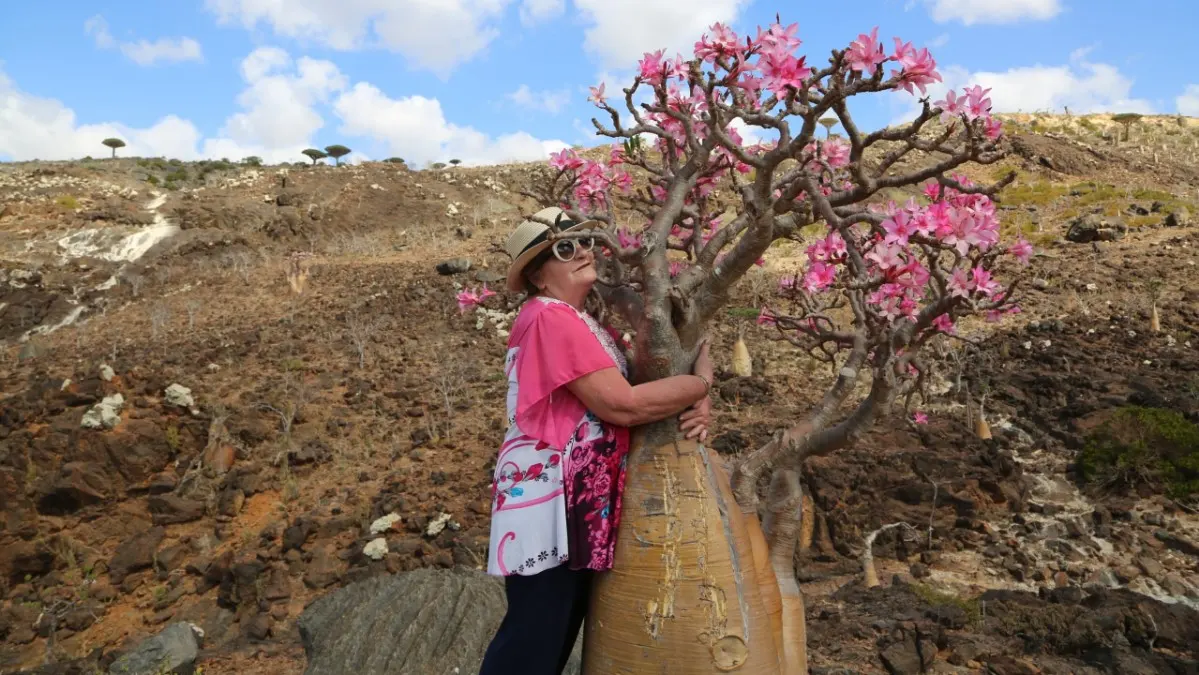
Socotra's bottle tree, also known as the Socotra desert rose, can produce pink flowers during the tourism season.
Flowering may begin around November in some areas.
Stronger displays often appear during February and March.
The timing depends on rainfall, elevation, location, tree health and local temperature.
No operator can guarantee full flowering during a particular tour.
Beaches and Swimming
Beaches and swimming are generally suitable from October to April, subject to daily sea conditions.
Popular coastal locations include Arher Beach, Aomak Beach, Detwah Lagoon, Shoab Beach, Dihamri, Qalansiyah and Ras Ersel.
October can remain transitional, particularly earlier in the month.
December to March usually offers comfortable beach temperatures.
April provides warmer and generally drier beach conditions.
A calm sea at one location does not mean every beach is safe on the same day. Travelers should always follow the local guide's instructions.
Diving and Snorkeling
The general diving and snorkeling season follows the October-to-April travel period.
February and March are particularly suitable for marine activities because they often provide a favourable combination of sea conditions, underwater visibility and surface weather.
Dihamri Marine Protected Area is one of Socotra's best-known snorkeling locations.
Underwater visibility can change because of wind, currents, tides, plankton, rain runoff and sea movement.
Diving requires separate planning and should be requested before the tour is confirmed.
Availability depends on current local diving operations, equipment, certification level, sea conditions and the planned itinerary.
Hiking and Camping
The October-to-April season is suitable for hiking and camping.
December to March generally provides the most comfortable temperatures for longer walks.
Popular hiking areas include Diksam Plateau, Firmihin Forest, Homhil, the Hajhir Mountains, Hoq Cave and Wadi Kalisan.
October and November can offer green scenery after seasonal rainfall.
April is better for shorter hikes scheduled early in the morning.
Highland camps can feel cool at night, while coastal camps are usually warmer.
Travelers should carry suitable footwear, sun protection, drinking water and a light warm layer.
Photography
The entire October-to-April season offers strong photography opportunities.
October and November can provide green wadis and dramatic skies.
December and January may produce mist around Dragon's Blood Tree forests.
February and March are particularly suitable for underwater photography and possible bottle-tree flowering.
April offers clear skies, dry landscapes and warmer beach conditions.
Drone users must arrange the required customs procedure and permit before flying.
Travelers bringing a drone must notify TourYemen in advance for current permit, customs and flying requirements.
Shoab Boat Trip
The boat journey from Qalansiyah to Shoab Beach normally operates during the October-to-April season.
Every departure remains subject to the local captain's decision.
The trip may be changed or cancelled because of wind, waves, currents or poor visibility.
TourYemen does not guarantee a boat trip when the sea is unsuitable.
Rain, Wind and Changing Conditions
Rain on Socotra is irregular and often highly localised.
One area may remain dry while the mountains or another coast receives showers.
Rain can temporarily affect:
- Wadi crossings
- Mountain roads
- Natural pools
- Camping locations
- Hiking routes
- Panoramic visibility
Rain also supports vegetation, fills natural pools and creates greener landscapes.
Weather and sea conditions can change during any month, including the main travel season.
TourYemen may adjust the itinerary when a route or activity is unsuitable.
Possible changes include:
- Replacing a coastal campsite because of strong wind
- Changing a mountain hike because of rain or mist
- Cancelling the Shoab boat trip because of rough seas
- Changing the order of visits following local flooding
These adjustments are part of responsible island operations and do not necessarily affect the entire tour.
Frequently Asked Questions
What is the best time to visit Socotra?
The best time to visit Socotra is from October to April. This is the island's main travel season and offers the most suitable overall conditions for tours, hiking, camping, beaches and exploration.
Is there one best month to visit Socotra?
No. The full October-to-April period is suitable. Different parts of the season may be better for particular activities.
Can I visit Socotra during summer?
June to September is not recommended for normal tours because of strong southwest monsoon winds, rough seas and reduced tourism operations.
When is the best time for diving and snorkeling?
The diving and snorkeling season generally runs from October to April. February and March are particularly suitable for marine activities.
When do Socotra bottle trees flower?
Flowering may begin around November, while stronger displays often appear during February and March. Exact timing varies naturally.
When is the best time to see Dragon's Blood Trees?
Dragon's Blood Trees can be seen throughout the October-to-April travel season.
Is December a good time to visit Socotra?
Yes. December offers pleasant temperatures and can provide green landscapes. Occasional local rain may affect roads or mountain visibility.
Is April a good time to visit Socotra?
Yes. April is warmer and generally drier. Beaches and swimming remain suitable, while hiking should be planned earlier in the day.
Does it rain in Socotra?
Yes, but rainfall is irregular and localized. It does not normally rain continuously throughout the tourism season.
Plan Your Socotra Tour with TourYemen
TourYemen operates Socotra tours during the October-to-April travel season
We coordinate:
- Socotra tour dates
- Yemenia Airways flight booking
- Socotra visa processing
- Airport arrival arrangements
- Local transport
- Camping or hotel accommodation
- Meals
- English-speaking guides
- Hiking and activity planning
- Boat trips when sea conditions permit
To begin planning your journey, send TourYemen your preferred travel month, number of travelers, main interests, preferred tour style and passport nationality.
Read the Flights to Socotra and Booking Guide